The mistake is waiting until the final urge is already loud. By then, your attention has narrowed and your standards are negotiating from bad ground. The stronger move is to build a system around the early signals.
Do not fight the final click. Fight the five steps before it.
1. The Trigger Loop Is A Sequence
The I-PACE model for addictive behaviors describes how personal factors, emotion, cognition, cue reactivity, craving, and executive control can interact over time. For a man trying to quit porn, that model becomes very practical: a cue appears, mood shifts, the old action promises relief, and the ability to stop can feel weaker if no prepared order exists.
That does not mean you are powerless. It means you need to stop treating relapse as a single moment. It is a sequence with pressure points.
Trigger loop: cue appears -> body reacts -> mind bargains -> privacy increases -> device moves closer -> old route begins.
Your job is to put a shield into one of those joints before the whole column moves.
2. Build Your Trigger Map
For one week, track the repeated conditions around urges. Keep it factual. No speeches. No self-attack. Just the field report.
- Time: late night, morning, after work, weekend.
- Place: bed, bathroom, desk, couch, car.
- Device: phone, laptop, old browser, social feed.
- State: tired, angry, bored, lonely, stressed, ashamed.
- Preceding action: scrolling, drinking, arguing, procrastinating, isolating.
When the same pattern appears twice, it is no longer random. It is a route. Routes can be blocked, redirected, and watched.
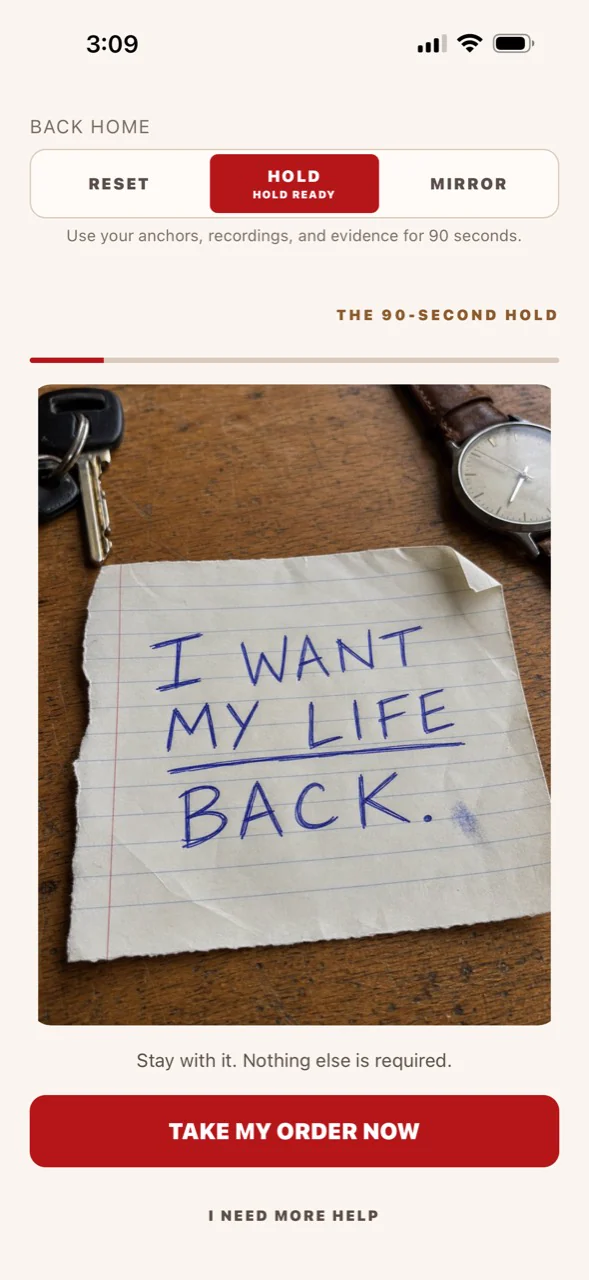
The PHALANX engine starts from the practical job: stay in control before the habit becomes automatic.
3. Use Friction Before You Need Willpower
Friction is not glamorous. It works because it changes the decision cost before your mood changes.
- Charge the phone outside the bedroom.
- Keep the laptop out of private rooms at night.
- Use grayscale or focus mode during your pressure points.
- Keep running shoes or a jacket visible by the door.
- Make the first alternative action physically easier than the habit.
Good relapse prevention does not depend on being inspired at midnight. It depends on making the next right action available when the brain starts looking for the old one.
4. Write If-Then Orders
Implementation intentions are simple pre-decisions: if a specific situation happens, then a specific action follows. They work because the decision is made before the emotional weather changes.
If I am alone in bed with my phone after 10 p.m., then I put the phone on the dresser and open Fortify.
If I begin searching for "harmless" content, then I stand up, turn on the light, and leave the room.
If I slip, then I log the trigger within five minutes and stop the binge route immediately.
The shorter the order, the better. The danger window is no place for complicated philosophy.
5. Do Not Let A Slip Become A Binge
A common failure point is the post-slip spiral: "I already failed, so the day is ruined." That thought turns one fall into a campaign loss.
Relapse prevention includes recovery after a slip. The order is blunt:
- Stop the session.
- Change the room.
- Record the trigger.
- Do one grounding action.
- Return to the next action.
The record matters because it converts shame into intelligence. Shame says "I am the problem." A record says "the pattern is visible now."
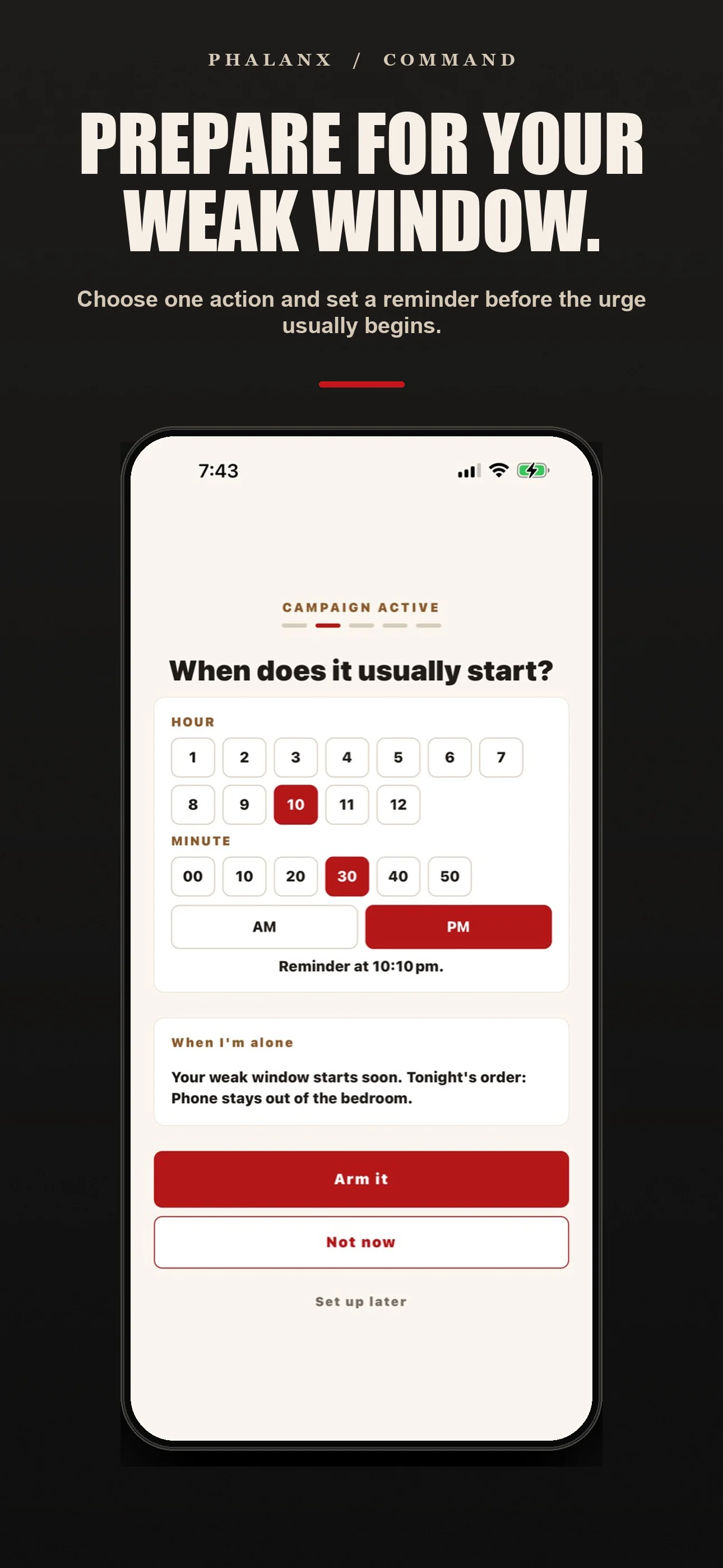
Private progress beats public performance. Track the pressure point, then adjust the next action.
6. Where PHALANX Fits In The Loop
PHALANX gives you a prepared action during the sequence. When the cue appears and the old route starts to form, Fortify gives you a drill. The Centurion gives you a next action. The Service Record helps you find patterns without turning recovery into public confession.
The app is not claiming medical treatment or replacing professional support. It is built for the operational problem: you need something to open before you open the thing you regret.
That is the shield wall: know the route, prepare the order, change the terrain, record the proof, and stay in control.
Open Command Before The habit Starts
Use PHALANX for the danger window: Fortify, Next Action, private record, no public performance.
Download PHALANXImportant: This article is educational and practical, not medical advice. If you are in immediate danger, experiencing self-harm thoughts, or unable to stay safe, contact emergency services or a crisis line now.
References
- Brand et al., I-PACE model update for addictive behaviors, Neuroscience and Biobehavioral Reviews.
- Voon et al., Neural correlates of sexual cue reactivity in individuals with and without compulsive sexual behaviours, PLOS ONE.
- Kraus et al., Compulsive sexual behaviour disorder in the ICD-11, World Psychiatry.
- Crosby and Twohig, Acceptance and Commitment Therapy for Problematic Internet Pornography Use: A Randomized Trial.
- Lopez-Pinar, Esparza-Reig, and Bothe, Psychotherapy for problematic pornography use: A comprehensive meta-analysis.
- Planning and implementation intention interventions, Handbook of Behavior Change.